Cover storyThe monthly briefing for people who staff automation teams
Robot orders are moving past the car plants.
More than half the robots ordered in North America this spring went to buyers outside the auto industry. Those plants need people who can install, program and keep the new cells running. Here is what moved in automation hiring this month, and what to do about it.
Robot orders
8,940
Robots ordered by North American companies in the second quarter, up 4.3% on a year earlier.
A3 · Aug 11, 2026
Beyond automotive
56%
Share of those robots ordered by customers outside the auto industry.
A3 · Aug 11, 2026
Capital plans
49.3%
Manufacturers expecting more capital spending next year, up from 37.1% last quarter.
NAM · Sept 14, 2026
Mechatronics pay
$73.9K
Median annual wage for electromechanical and mechatronics technicians, May 2025.
BLS · 2026
01 · Cover story · Robot orders
Robot orders are moving past the car plants.
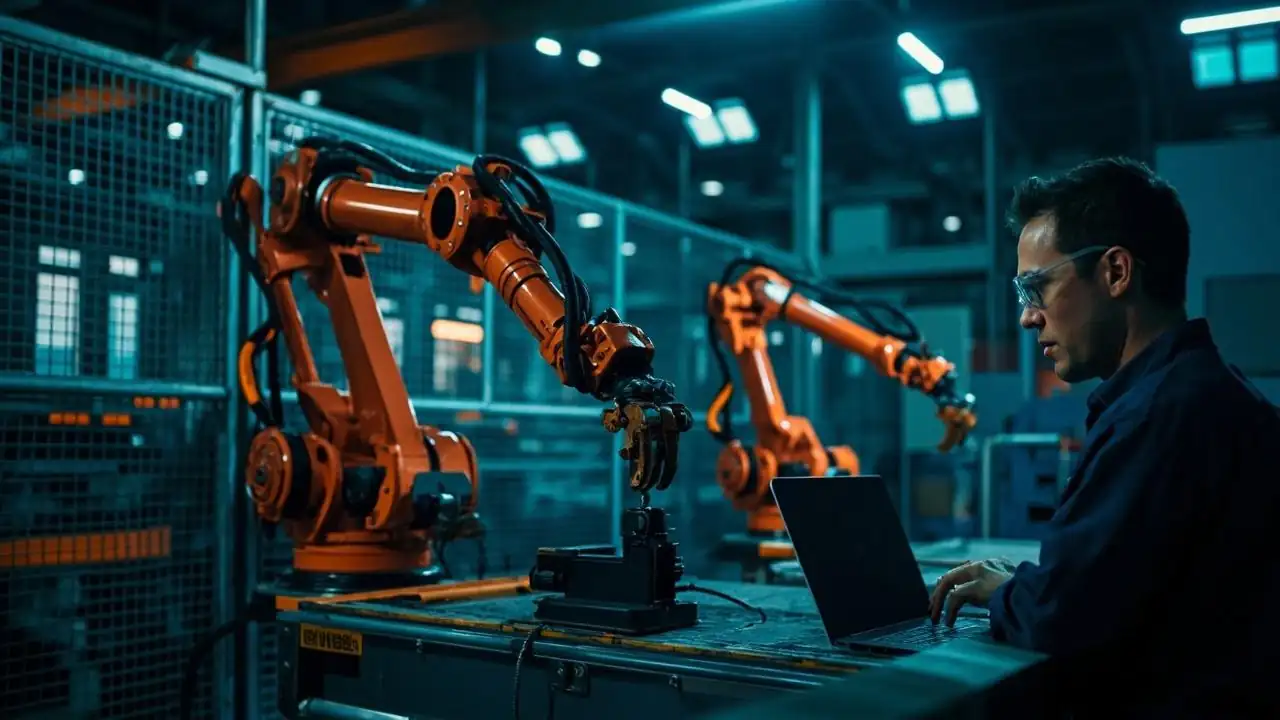
Automakers ordered fewer robots this year. Chip, food, metals and life sciences plants ordered more, and they bring different hiring needs.
New customers, new plants, the same short list of people who can commission a cell
North American companies ordered 8,940 robots valued at $622 million in the second quarter of 2026, according to the Association for Advancing Automation. Units rose 4.3% on a year earlier and order value rose 21.3%.
The mix is the story. Across the first half, orders from automotive manufacturers fell 25%, while other industries made up the difference. In the second quarter, customers outside the auto industry accounted for 56% of robot units ordered, and semiconductor and electronics orders rose 38%.
The breadth of growth outside Automotive OEM is an important trend we'll continue to watch.Alex Shikany, Executive Vice President, A3
For hiring, that shift matters more than the headline count. An integrator whose engineers have only commissioned body shop cells now bids on a pharma packaging line or a food plant with washdown rules. The candidate who has worked inside that kind of plant is worth more than one who has not.
In life sciences, cobots are close to half of new robots.
Collaborative robots work beside people rather than behind a fence. That changes who you need to set them up.
Collaborative robots were 12.7% of all robot units ordered in the second quarter and 15.4% across the first half. In two growing industries the share is far higher: cobots made up 43.7% of first half robot orders in life sciences, pharma and biomedical, and 36.5% in semiconductors, electronics and photonics.
A cobot cell asks for a different blend of skills than a fenced one: risk assessment for people working alongside the arm, quick changeovers, and operators trained to run it themselves. Engineers who have done that work are a narrower pool than conventional robot programmers.
Robot order growth by industry, second quarter
Change in units ordered versus Q2 2025, North America
The maintenance bench decides whether the robots run.
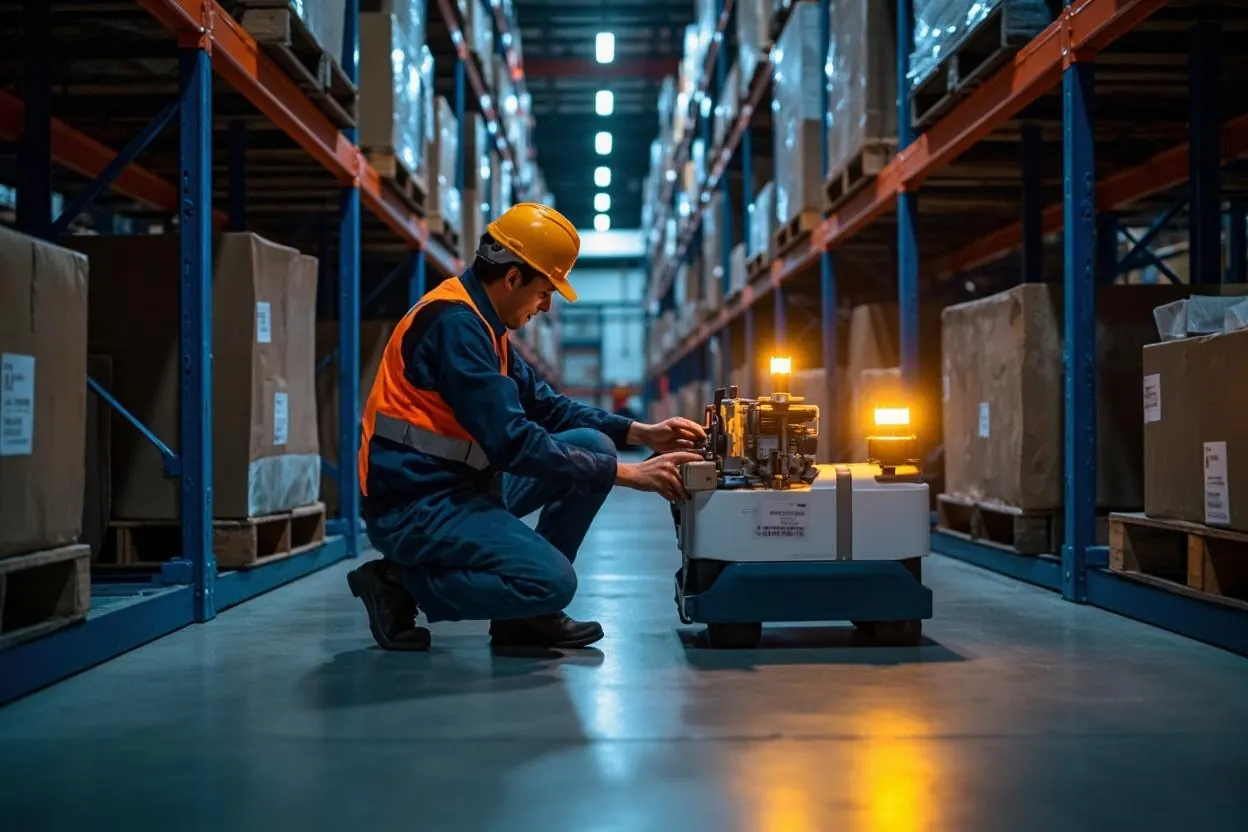
The integrator leaves after commissioning. Your own people keep the cell producing for the next ten years.
Every automated line still needs a person who can open the panel
The Bureau of Labor Statistics projects about 51,900 openings a year, on average, for industrial machinery mechanics, machinery maintenance workers and millwrights over the decade to 2035. Employment in the group is projected to grow 14%, much faster than the average for all occupations.
Many of those openings come from people retiring or changing careers, not from new jobs. That is the risk in an automation project: the new cell arrives on schedule, and the technician who knew the old line best leaves the same year.
Put the maintenance hire in the project plan, with a start date before commissioning, so that person learns the cell while the integrator is still on site.
Price the mechatronics seat against its own number.
A mechatronics technician and a maintenance mechanic are different occupations in the government's pay data. Their medians sit about $10,000 apart.
The median annual wage for electromechanical and mechatronics technologists and technicians was $73,900 in May 2025, or $35.53 an hour. For industrial machinery mechanics, maintenance workers and millwrights it was $64,100.
The mechatronics group is small, with about 1,400 openings a year projected nationally. Manufacturers in the NAM survey expect wages overall to rise 3.1% over the next 12 months.
A national median is a starting point, not an offer. Local pay can sit well above or below it, and shift, travel and controls experience all move the number.
Your next technician may be fixing something else today.
A new study counts the technicians outside manufacturing whose skills could carry over.
Deloitte and the Manufacturing Institute identify nearly 2 million technicians in adjacent industries whose broad skills may be transferable to manufacturing. Their analysis estimates employers may need to fill 2.3 million job openings across manufacturing and adjacent technician occupations between 2025 and 2030.
The same study finds manufacturing technician employment could grow six times faster than production occupations over that period. Think of the people who already troubleshoot electrical and mechanical systems for a living: building systems technicians, elevator and HVAC service staff, avionics and military maintenance veterans.
They will not know your robot brand on day one. They already know how to find a fault under pressure, which is the harder thing to teach.
Troubleshooting carries over. The brand of controller can be taught
Capital budgets are opening. Tariffs still set the start date.
More manufacturers plan to spend on equipment next year. Most manufacturers also name trade uncertainty as a current challenge.
Spending plans
49.3% expect more capital spending
Up from 37.1% last quarter. Expected growth in capital investment rose to 2.6%, a four year high in the NAM survey.
The brake
62.44% cite trade uncertainty
Actual or proposed tariffs and trade negotiations. Only rising raw material costs and health care costs were named more often.
The people
54.93% cite the workforce
Attracting and retaining a quality workforce. On average, respondents said 4.79% of their jobs remain unfilled.
For automation teams this cuts two ways. Approved projects create a wave of commissioning and controls work. Projects still waiting on a tariff decision can slip, and a candidate who accepts an offer tied to a project that stalls becomes a retention problem. Tell candidates which projects are approved and which are planned, and hire first for the approved ones.
Manufacturing employment as a whole rose by 16,000 in August and is up 58,000 since a recent low in December 2025. The machine builders who compete with you for controls and assembly talent are part of that climb.
Next release
September jobs report due October 2
The Bureau of Labor Statistics publishes the September Employment Situation on Friday, October 2, 2026. Watch whether machinery keeps adding workers.
Three questions to bring to your next project review.
Industry
Which industries are our next six projects in, and who on the team has worked inside one of those plants?
Plant experience is the scarce skill, not the robot brand.
Handover
Who owns this cell the day after the integrator leaves, and do they start before commissioning?
A maintenance hire made after startup learns the cell from a manual.
Offer
Is this seat priced as a mechatronics role or as a maintenance grade?
The national medians differ by about $10,000 a year.
Have an automation seat that has stayed open too long? Run it through the SourceOwls Hiring Desk: local pay for the role, where your offer sits, and what to do about it this week. Free, and no email needed.